
Researcher Profiles

Wenbin Xiao, MD, PhD
Memorial Sloan Kettering Cancer Center
2026 Funding Recipient
Defining and Targeting Epigenetic Dependencies Driving Clonal Fitness and Myeloid Transformation in FPDMM
EvansMDS Discovery Research Grant 2026
PROJECT SUMMARY
Myelodysplastic syndrome (MDS) is a blood disorder in which the bone marrow fails to produce healthy blood cells and can progress to acute leukemia. In about 10-15% of patients, MDS is linked to changes (mutations) in a gene called RUNX1, which normally helps control how blood stem cells grow and mature. Individuals with inherited RUNX1 mutations develop a condition called familial platelet disorder and face up to a 50% lifetime risk of developing MDS or leukemia.
Currently, there are no treatments that specifically target RUNX1-related myeloid malignancies or prevent it from progressing. Most therapies are given only after MDS or leukemia has already developed, and those therapies do not work well for RUNX1-mutated MDS or leukemia.
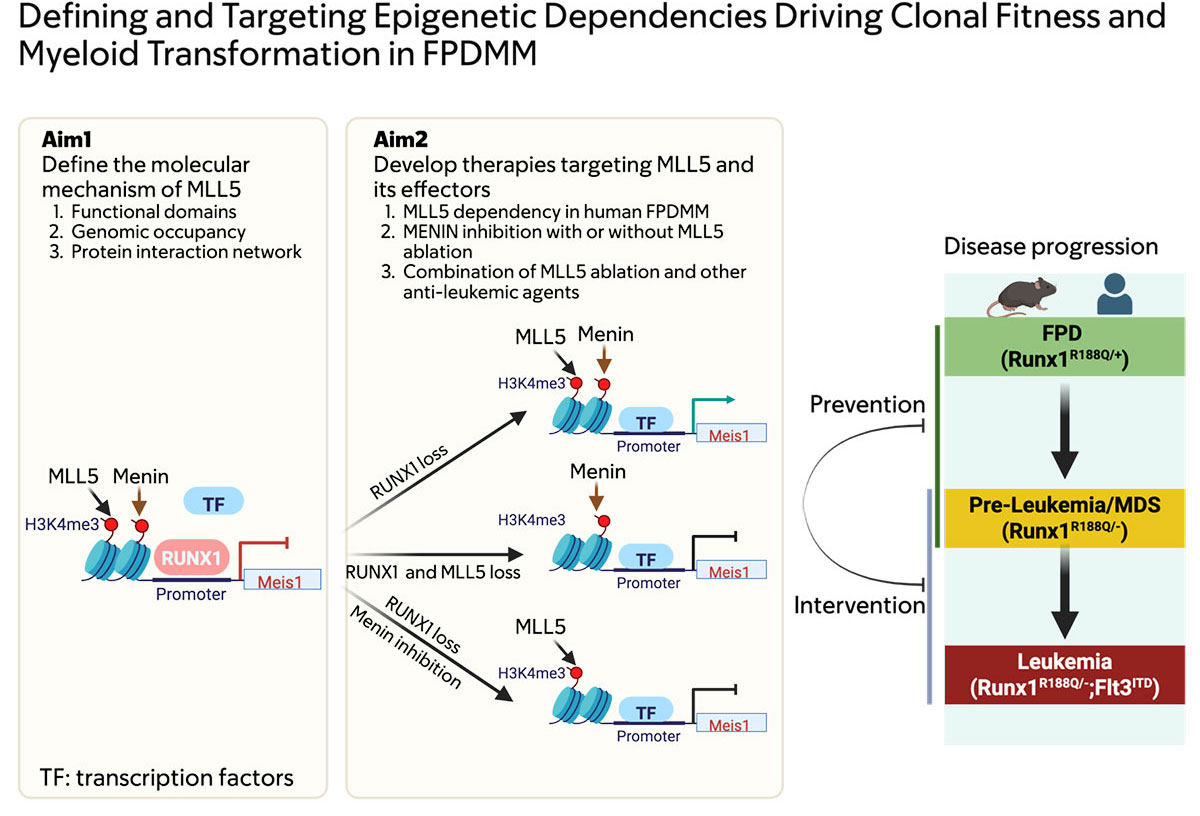
Our research seeks to understand why RUNX1-mutant blood stem cells gain a growth advantage and turn into cancer. Using advanced laboratory models that closely mimic inherited patient disease, we discovered that RUNX1-mutant cells rely on another protein called MLL5 to survive and expand. In preclinical models, genetic loss of MLL5 prevents the progression of abnormal blood cells toward MDS or leukemia while largely sparing normal hematopoiesis.
This project will define how MLL5 drives disease progression and test new ways to block it. If successful, this work could lead to targeted therapies that prevent or delay MDS and leukemia in high-risk patients, including those with inherited RUNX1 mutations. More broadly, it could improve outcomes for patients with RUNX1-mutant MDS by introducing more precise, less toxic treatment strategies aimed at stopping disease progression before it becomes life-threatening.