
Researcher Profiles

Robert Stanley, MD, PhD
Memorial Sloan Kettering Cancer Center
2026 Funding recipient
Understanding the Spatial Landscape of Immune Suppression in MDS and Opportunities for Immune Rewiring
EvansMDS Young Investigator Award 2026
PROJECT SUMMARY
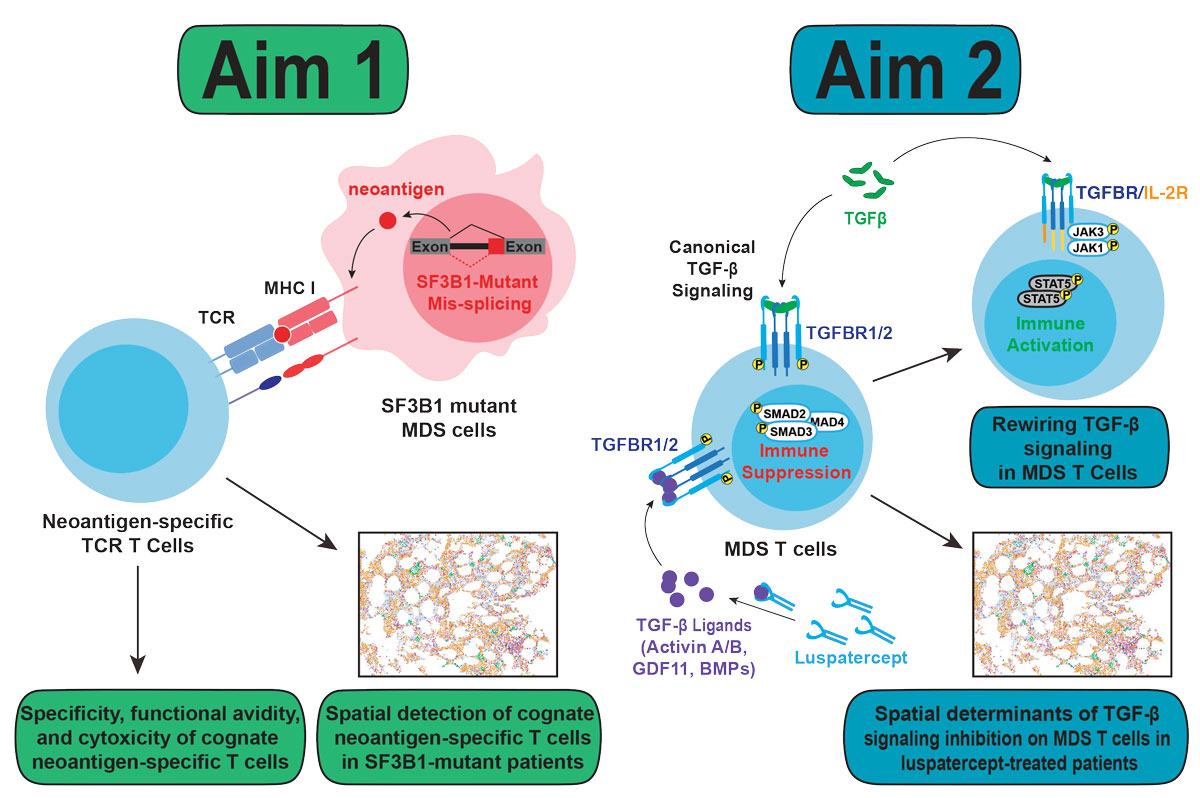
Myelodysplastic syndromes (MDS) are blood cancers with few effective treatments. In many patients, T cells fail to control abnormal bone marrow cells, allowing MDS to progress. We aim to understand why these T cells become “dysfunctional” and how to redirect them to better target MDS cells. We still do not know where these T cells are located in the marrow, how they interact with MDS cells, or why they fail to prevent worsening disease. Our prior work shows that MDS mutations in SF3B1, a gene that controls RNA splicing, create abnormal RNA “messages” that can generate new protein fragments called “neoantigens”. These neoantigens are targets the immune system can recognize and defining them is critical for new therapies. We also found that SF3B1-mutant MDS cells produce high levels of the immune-suppressing signal TGF-ß, but how TGF-ß signaling disrupts T cell function in MDS is poorly understood. This project will identify and map T cells that recognize MDS neoantigens and test ways to overcome TGF-ß–signaling suppression. In Aim 1 we will identify T cells that recognize SF3B1-related neoantigens and map their location and dysfunction in patient marrow. In Aim 2 we will determine how TGF-ß signaling shapes T cell function and location in MDS and test ways to rewire T cells to improve function. This work will advance the MDS field by revealing immune–MDS interactions in patient marrow, discovering new immune targets, and identifying strategies to “wake up” suppressed T cells.