
Researcher Profiles

Julia Maxson, PhD
Oregon Health & Science University
2026 Funding Recipient
Understanding KAT inhibitor response and resistance in SETBP1-mutant myelodysplastic disorders
EvansMDS Discovery Research Grant 2026
PROJECT SUMMARY
Myelodysplastic syndromes (MDS) and myelodysplastic/myeloproliferative neoplasms (MDS/MPN) represent some of the most difficult to treat types of blood cancer. Despite decades of research, most new clinical trials have failed to improve survival rates for these patients, and we have few drugs that extend survival for these patients. Within this group of difficult to treat cancers, patients whose tumors carry mutations in a gene called SETBP1 have a particularly challenging course. On average patients who have MDS with a mutation in SETBP1, survive only half as long as other patients with these diseases. There is an urgent need to develop lifesaving therapies for patients with this hard-to-treat type of blood cancer.
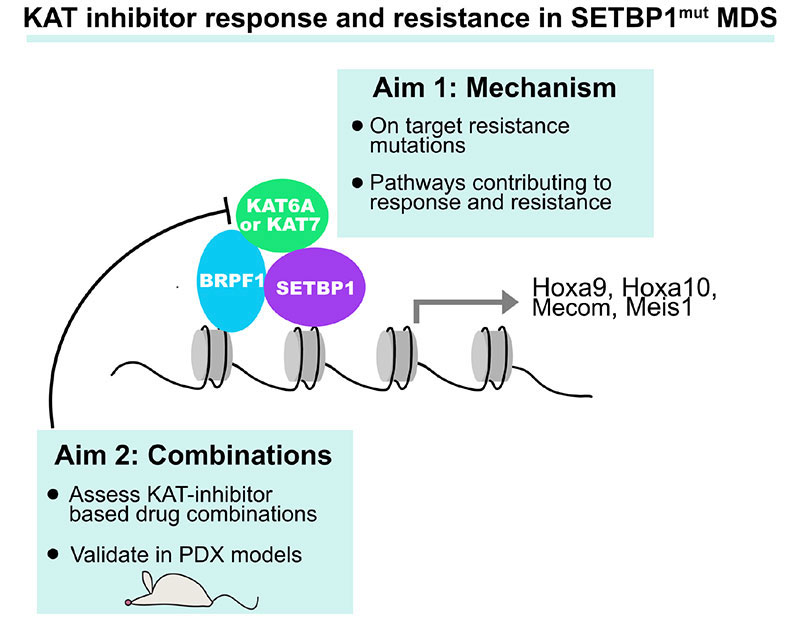
Our research team has recently found a promising new treatment strategy for SETBP1-mutant MDS. We have found that cancer cells with mutations in SETBP1 rely on a specific group of proteins (called MYST acetyltransferases) for their growth and survival. Excitingly, drugs that target MYST are highly effective in SETBP1-mutant mouse models of blood cancer. In these laboratory models, these drugs do not merely control disease, the mice remain disease-free even after treatment is stopped. The goal of this research project is to ensure that we are prepared to design clinical trials for these patients in the best way possible. To this end, we need to understand which patients will respond to these drugs, anticipate how the cancer may become resistant to drug, and design strategies to use multiple drugs simultaneously to prevent the cancer from coming back. Our goal is for all patients with SETBP1-mutant MDS to have effective treatment options that prevent the lethality of this disease.