Researcher Profiles
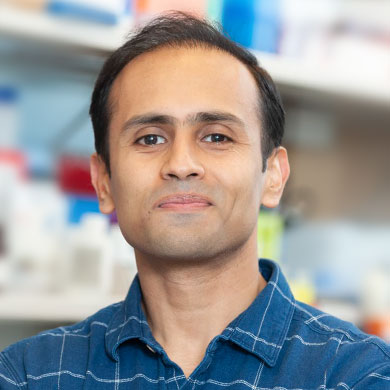
Harold Elias, MD
Memorial Sloan Kettering Cancer Center
2026 Funding Recipient
ZBTB1 as a Genotype-Specific Synthetic Lethal Target in DNMT3A-Mutant MDS
EvansMDS Young Investigator Award 2026
PROJECT SUMMARY
Blood cells are made in bone marrow by stem cells. As people age, some stem cells develop DNA mutations that give them an unfair advantage. These mutant cells grow faster and take over the bone marrow. This condition—clonal hematopoiesis—affects 1 in 5 people over 60 and can lead to blood cancers like myelodysplastic syndromes (MDS) and leukemia. The most common mutation occurs in DNMT3A, found in nearly one-third of MDS patients. Currently, doctors can only watch and wait—no treatments exist to stop these cells before they become cancer.
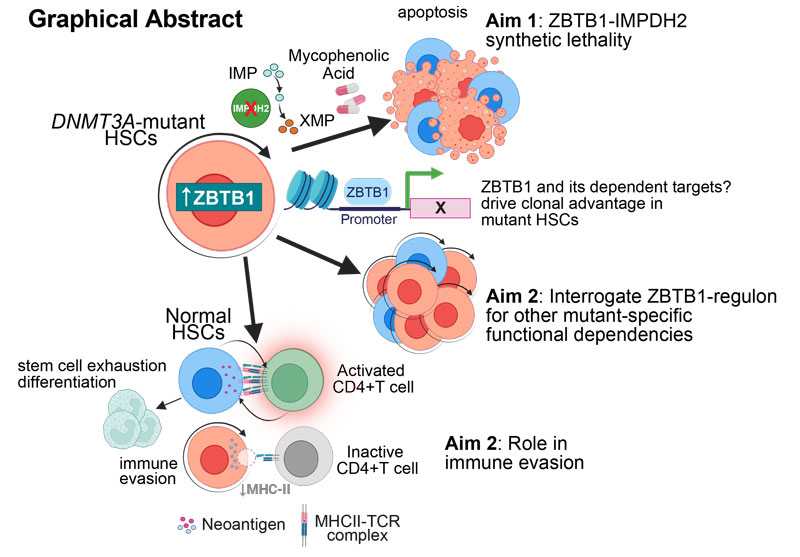
We discovered that DNMT3A-mutant stem cells are addicted to ZBTB1—they need it to survive, but healthy stem cells do not. ZBTB1 activates IMPDH2, a metabolic enzyme we can block with an FDA-approved drug that selectively kills mutant cells while sparing healthy ones. We also found ZBTB1 represses immune-recognition genes, helping mutant cells hide from the immune system. Blocking this pathway may both weaken mutant cells and expose them to immune attack—a dual kill mechanism.Our team identified this addiction and engineered human stem cells carrying the exact patient mutation using precision gene editing. We will use these tools to test whether targeting ZBTB1-controlled pathways eliminates mutant cells, and whether doing so restores immune recognition—allowing the body to clear them naturally.By removing addicted cells early, our goal is to develop the first treatment that stops MDS before it starts.